
Onion for Freezing
Onion is a high-yield vegetable crop and a valuable food product. The leaves, green onions, and bulbs contain proteins, sugars, mineral salts, vitamins, essential oils, and phytoncides.
The varieties of bulb onions are divided into sharp, semi-sharp, and sweet. In irrigated lands, the following varieties are grown: Sunny, Chernihiv, Soyuz — sharp varieties; October, Donetsk Gold, Luhansk — semi-sharp; Yalta Local — a sweet variety of onion. The best onion varieties for mechanized harvesting are Soyuz, Chornomorska, and Donetsk Gold. Currently, onion is one of the most important vegetable crops.
Onion bulbs and leaves are used as seasoning in the canning industry, for salads, vinaigrettes, mushrooms, vegetable and meat dishes, as well as a spicy-vitamin snack and flavoring additive for soups, sauces, gravies, and fillings. For several years, Tevitta brand has been freezing bulb onions, mastering the processes of freezing and is happy to share their knowledge. The stages of sorting, inspection, and freezing of the product were described by the Deputy Director of Production at Tevitta, Valentyna Hulina.
Frozen onion, processed with shock freezing technology (IQF), retains all its beneficial qualities and properties.
Where is the onion for freezing sourced from? What are the requirements for delivery?
Onion is supplied from neighboring farms. The factory has been working with most of these farmers for several years, so they are familiar with the required standards. The factory has approved specifications for each product. The quality requirements are quite simple: no rot, mold, signs of disease, or pests.
For onions, it is also important that they do not show signs of sprouting, meaning they should be free of green “tips.” We also have the ability to freeze the product according to specifications provided by the clients. Each agricultural producer can bring their own product for freezing, and we can freeze it according to the provided specification for the final product.
How is the onion inspected during receiving?
Onions are received in batches. A batch is considered any quantity of fresh raw material of the same cultivar, harvested at the same time, in uniform packaging, which is subject to simultaneous acceptance and documentation with one quality certificate. The quality control inspector conducts an incoming raw material check in accordance with the “Incoming raw material, auxiliary materials control” guidelines.
What processes does the onion undergo before freezing?
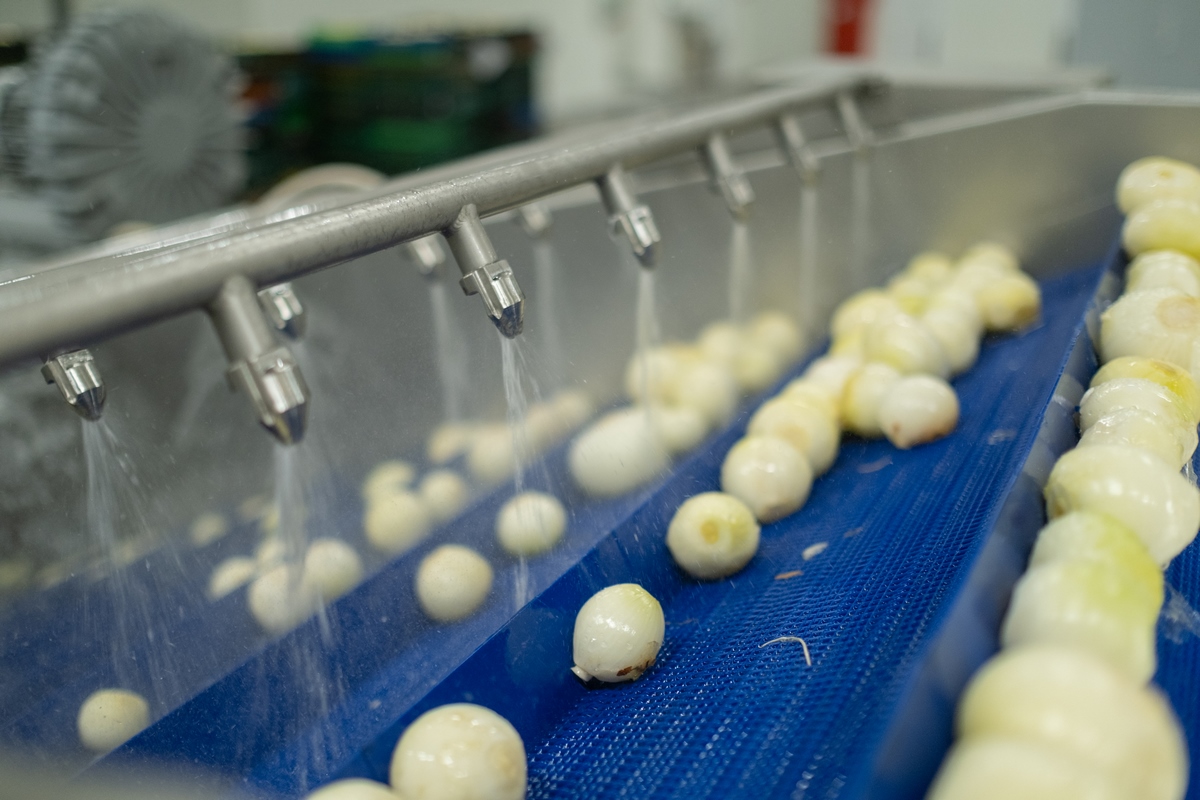
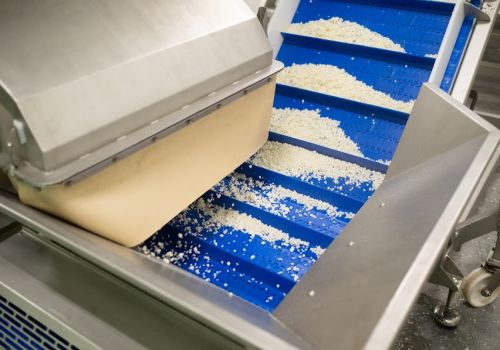
The preparation for freezing involves several stages: peeling, washing, inspection, and cutting. We have 2 cutting attachments: cubes 10×10 and 6×6. This depends on the client’s needs or our own requirements for further market sale. Freezing takes place in a shock freezer at a temperature of minus 30°C. Our factory freezes the product using the IQF (Individually Quick Frozen) technology, i.e., shock freezing. To completely freeze the product, it takes between 8 to 12 minutes. This method helps preserve all the vitamins and minerals that were present in the fresh product.
What happens after freezing?
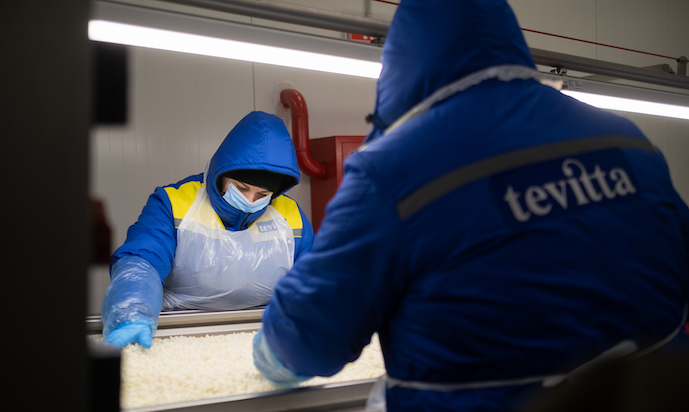
After the freezing stage in the fluidized tunnel, the standard cubes are separated into a sieve, inspected, and packed into transport packaging. The mandatory next step is scanning with a metal detector and forming pallets with the finished products.
How is the onion packed?
At what temperature and how long does it last? The onion is packed into boxes or bags. This happens on a weighing doser, where the raw material is received, and the weight is then fixed. When the system detects that a sufficient amount of raw material has been loaded, the sensor activates, and the machine transfers the product into the box. Boxes are formed in 10 kg increments, and bags in 20 kg increments, but everything is double-checked with control weighing. If the weight is correct, the box passes; if not, the operator adjusts it. Afterward, the boxes are sealed, scanned with a metal detector, stacked onto pallets, labeled, and sent to the warehouse for storage. The shelf life of the frozen product is 2 years, at temperatures no higher than minus 18°C — no more than 24 months from the production date.